
Your Clutch Pressure Plate Manufacturers
We 13 years of CNC machining experience.In 2015, Jenkin decided to enter foreign market.Currently, we have 27 CNC 3 axis milling machines, 1 CNC 5 axis machine, 2 lathes and 3 CNC mill-turn combination machines.
Why Choose Us
Precision and Quality
At our manufacturing facility, we prioritize precision and quality above all else. Our state-of-the-art equipment and experienced team ensure that every part we produce is crafted to exacting standards, with exceptional attention to detail.
Comprehensive Capabilities
With a wide range of manufacturing capabilities, including plastic injection molding, metal injection molding, aluminum die casting, zinc die casting, and laser cutting, we can handle all of your custom metal and plastic parts needs in-house. This means faster turnaround times and greater control over the production process.
Flexibility
We're flexible and adaptable to meet the unique needs of each of our clients. Whether it's a small, one-off project or a large-scale production run, we can tailor our manufacturing process to suit your specific requirements.
Certification
As a ISO9001 certificate CNC machining manufacturing vendor, we not just provide high quality production service, but design engineering solutions.
-

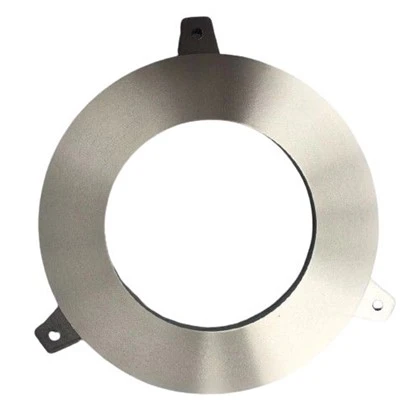
High-quality Custom Clutch Pressure Plate
High-quality Custom Clutch Pressure Plate Add to Inquiry -
Toyota LANDCRUISER Clutch Pressure Disc Auto Parts
Toyota LANDCRUISER clutch pressure disc auto parts Add to Inquiry -
Toyota DAIHATSU_clutch Pressure Plate
Toyota DAIHATSU_clutch pressure plate Add to Inquiry -
OEM Clutch Customized 255 Clutch Pressure Plate Bottom Ac...
OEM Clutch Customized 255 clutch pressure plate bottom accessories 1041 clutch pressure plate bottom Add to Inquiry


Clutch Construction with Components
A clutch consists of several key components: the clutch disc, pressure plate, flywheel, and release bearing. The clutch disc is sandwiched between the pressure plate and the flywheel. When engaged, the pressure plate applies pressure to the clutch disc, allowing power transfer. When disengaged, the pressure is released, interrupting the power flow.
Material of Clutch Pressure Plate
The geometry of the clutch pressure plate is complex and requires good heat transfer, high coefficient of friction and wear resistance. It is therefore usually cast from gray cast iron HT200. The metal structure is a pearlite structure, and the hardness is HB170-227. In addition, a small amount of metal elements (nickel, iron, manganese alloy, etc.) can be added to increase mechanical strength.
Types of Clutch Pressure Plate
Borg and Beck
Borg and Beck pressure plates are commonly found on older GM, Chrysler, and some AMC Models. These pressure plates use multiple coil springs actuated by three 1 inch wide levers to engage and disengage the clutch. Borg and Beck pressure plates have only a preset, or static amount of pressure to clamp to the flywheel.
Long
The Long style clutch pressure plate is commonly found in older Ford muscle cars and trucks and is the basis for many modern drag race clutches. It has 3 levers that actuate multiple coil springs to engage and disengage the clutch. The levers are weighted and provide added centrifugal pressure as rpms increase. This adds to the static pressure of the coil springs allowing the long style clutch to hold more power.
Diaphragm
A diaphragm clutch is commonly found in late model vehicles and as an upgrade for both previous types. The diaphragm style pressure plate utilizes a one-piece Bellville, or diaphragm spring. The Bellville spring allows for a relatively light pedal effort and smoother engagement compared to both the Borg and Beck and Long types.
Pressure Plate Type Characteristics
|
Pedal Feel |
Linkage Type |
Best Use |
|
|
Borg and Beck |
Heavy Effort |
Mechanical |
Race/Limited Street |
|
Long |
Heavy Effort |
Mechanical |
Race/Limited Street |
|
Diaphragm |
Light Effort |
Cable,Hydraulic or Mechanical |
Daily Driver / Race |
Application of Single Plate Clutch
Single plate clutch finds application in multiple settings, such as:
Cars and motorcycles
Light to medium-range industrial machines
Agricultural tools and equipment
Generators and power take-off mechanisms
Small boats and marine propulsion devices

Installation Position of the Car Clutch Pressure Plate
The car clutch pressure plate is mounted on the flywheel of the truck engine, which is a very important component because without it, the power of the truck engine would not be transmitted to the transmission. The clutch is the truck's driveline, which connects the engine to the transmission and can also disconnects the engine from the transmission. Clutch plate is under the car clutch pressure plate, and the former has a spline in the middle which can fix a transmission shaft. The transmission shaft is the transmission of the power input shaft.
When the truck driver presses down on the clutch pedal, the clutch disconnects, at which point power from the engine cannot be transferred to the transmission. When the truck driver lifts the clutch pedal, the clutch is connected, and power from the engine is transferred to the transmission. With the increase of truck driving distance, the auto clutch plate will gradually wear, when it wears to a certain extent, it needs to be replaced. If the auto clutch plate appears excessive wear phenomenon, slipped phenomenon occurs and then the engine cannot transfer all the power to the transmission.
How to Choose Clutch Plate Design
Before sourcing clutch plates for resale, ensure they meet the target market's needs. Here are some factors to consider:
Vehicle Suitability
It is important to choose a clutch plate design that is compatible with the car's make, model, and year of production. Not all vehicles have the same clutch system. For example, some cars have a pull-type system, while others have a push-type system. Mismatched plates will cause slippage and frequent breakdowns.
Driving Conditions
Consider the driving environment. Is it city traffic, highway, or off-road? In heavy traffic, a clutch plate with a tougher friction material is needed to withstand frequent engagements. For hilly terrains or loading trucks, a larger clutch plate size with better heat dissipation is required.
Performance Expectations
Decide the level of performance required from the clutch. Do customers want a smooth drive, or are they looking for high-performance racing clutches? High-performance plates give quick engagement and disengagement, translating to better power delivery. However, they may cause more wear and tear over time.
Quality and Reliability
Source clutch plates from reputable manufacturers that adhere to international standards. Quality plates undergo rigorous testing and have warranties. Customers will associate the clutch's durability with the brand.
Budget
Clutch plates come in a wide range of prices. High-quality and custom plates tend to cost more. However, they provide value to end users. While it is tempting to buy cheap plates, they may not last. Therefore, compare the quality and pricing of different suppliers on Alibaba.com.
Installation
Some clutch plates are easier to install than others. For example, single-mass flywheels are simpler compared to dual-mass flywheels. Dual-mass flywheels have complex mechanisms that absorb shocks but require skilled technicians. If most clients prefer DIY installations, source plates that come with detailed installation manuals.
Future Maintenance
Choose a clutch plate design that requires minimal maintenance. Discuss with the supplier about the expected lifespan of the plate. Also, find out if the manufacturer provides after-sales services and spare parts for repairs.
FAQ
We're well-known as one of the leading clutch pressure plate manufacturers and suppliers in China. Please feel free to wholesale high quality clutch pressure plate at competitive price from our factory. For more information, contact us now.
Precision Aluminum CNC Machining Parts, Custom Injection Molded Plastic Parts, Custom Acrylic Keyboard Case