
Your Custom Engine Parts Manufacturers
We 13 years of CNC machining experience.In 2015, Jenkin decided to enter foreign market.Currently, we have 27 CNC 3 axis milling machines, 1 CNC 5 axis machine, 2 lathes and 3 CNC mill-turn combination machines.
Why Choose Us
Precision and Quality
At our manufacturing facility, we prioritize precision and quality above all else. Our state-of-the-art equipment and experienced team ensure that every part we produce is crafted to exacting standards, with exceptional attention to detail.
Comprehensive Capabilities
With a wide range of manufacturing capabilities, including plastic injection molding, metal injection molding, aluminum die casting, zinc die casting, and laser cutting, we can handle all of your custom metal and plastic parts needs in-house. This means faster turnaround times and greater control over the production process.
Flexibility
We're flexible and adaptable to meet the unique needs of each of our clients. Whether it's a small, one-off project or a large-scale production run, we can tailor our manufacturing process to suit your specific requirements.
Certification
As a ISO9001 certificate CNC machining manufacturing vendor, we not just provide high quality production service, but design engineering solutions.
-

Gearbox Engine Parts Custom Coupler And Adapter
Gearbox engine Parts custom coupler and adapter Add to Inquiry -
High Precision Custom Engine Parts
High Precision Custom Engine parts Add to Inquiry -
Customized Automobile Engine Parts
Customized Automobile Engine Parts Add to Inquiry -
Custom Gearbox Adapter Plate
Custom Gearbox Adapter Plate Add to Inquiry


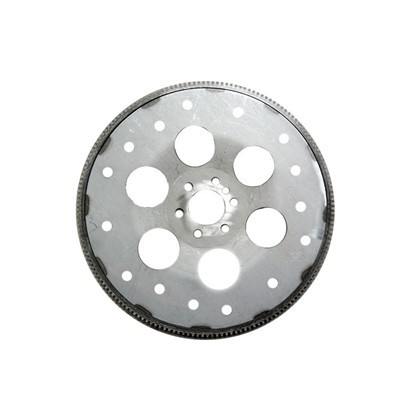
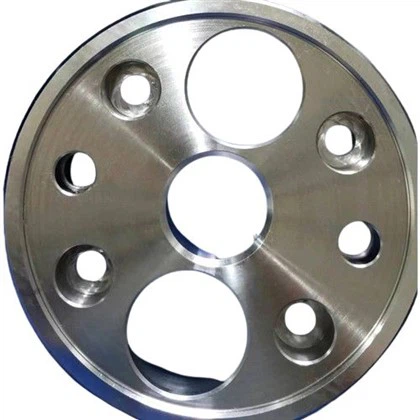
What are the Parts of Engine?
There are many different parts that make up engines consisting of: the engine block (cylinder block), combustion chamber, cylinder head, pistons, camshaft, timing chain, valve train, crankshaft, valves, rocker arms, pushrods/lifters, fuel injectors, spark plugs, Bolts & Nuts.
We provide different type of fasteners & components for different type of engines like car engine, ship engine, airplane engine, truck engine, railways engine etc.
Top 3 Applications for Custom Auto Parts
In contrast to popular belief, custom auto parts are not just used to beautify your car. These parts are also used in a wide array of applications other than that. Below are some of the use cases:
Promote Individuality of your Car
This is adding a touch of your personality as an owner. You may add a custom machined gear shift knob, customized wheel rims, bumpers, and many more, according to your preference.
Performance Enhancement
One of the use cases for custom machined auto parts is car tuning or functional modification. This involves changing stock parts into custom-made parts like the intake manifold, crankshafts, camshafts, engine cylinder & pistons, and suspension. In the car racing industry, the customization of these parts is necessary to push an engine beyond its optimum performance and achieve an advantage over other competitors.
Aftermarket Replacement Parts
Sometimes machining auto parts for replacement is quicker than acquiring one from the supplier. Also, CNC machining is one of the most reliable solutions for fabricating spare parts not sold anywhere in the market because they may be already obsolete.
Custom Automotive Parts Manufacturing Workflow
Prototyping
In the first stage of custom automotive parts manufacturing, a proof of concept prototype is developed alongside a visual model. This prototype is then presented to the development team for further improvements and performance analysis. Since custom automotive parts must be versatile and more efficient compared to OEM parts, the prototype undergoes rigorous testing across various scenarios. The engineering team evaluates the CAD model's performance, and after completing all test cycles, the prototype is approved for design and production. Depending on the complexity of the part, the prototyping phase can take weeks or even months until the final design is approved for the next stage.
Design and Production
The subsequent phase in custom automotive parts manufacturing involves transitioning from the approved prototype to design and production. This stage sees the integration of assembly lines and industrial automation, with automation being particularly vital as machines handle tasks such as painting and welding for each component's production. During the design phase, companies utilize various metals and raw materials to fabricate custom parts. Each production firm meticulously executes these processes as they directly influence the efficiency of the final product.
Quality Check and Assessment
The third stage of custom automotive parts manufacturing is equally significant to production. During this phase, the end deliverable undergoes rigorous real world testing to ensure quality. The custom-built part is installed into the vehicle for evaluation of its quality and performance, a crucial step preceding its introduction to the market. These assessments confirm that each part operates according to plan and meets performance standards while adhering to compatibility guidelines for the vehicle.
Shipping
In the last stage of custom automotive parts manufacturing, the components are made available for public use by shipping them through authorized dealerships and manufacturers.
Common Materials for Casting Engine Parts
The most common materials for casting engine parts are iron base alloy steels. The piston ring, piston pin, turbo charger, and the exhaust manifold all typically use stainless steel, while low alloy steels will suffice with proper heat treatments. Mechanical parts for all industries are often divided into general parts and special parts and are also distinguished according to their material of construction.
Ferrous and Nonferrous Metal Materials
Although many manufacturers avoid the ferrous vs. nonferrous groupings, it's important for a machining team to understand the difference for high-speed machining applications.
Ferrous materials include various steels, cast steels, and cast irons. These materials have good mechanical properties such as strength, ductility, and toughness, among others. In addition, ferrous materials are relatively inexpensive, readily available, and able to meet a variety of performance and application requirements. Among ferrous metals, alloy steels, stainless steels, tool steels, titanium, nickel, and others are used for aerospace materials. Alloy steel casting is perfect for projects that require wear and corrosion resistance with high-strength, while carbon steel casting is best for projects that require more strength, like springs and wires.
Non-ferrous metal materials offer advantages in electrical, tubing, and pipework applications. Common nonferrous materials range from copper alloys, aluminum alloys, and brass. Non-ferrous materials offer the advantages of low density, good thermal conductivity, and are typically used in applications where friction, wear, and corrosion resistance are required.
Composite Materials
Composite materials combine two or more individual materials to obtain desired physical or mechanical properties and improve operational outcomes.
For example, non-metallic materials such as glass, graphite (carbon), boron, and plastic can be composited into various fiber-reinforced materials. A plastic composite steel plate with high strength and corrosion resistance can be obtained by attaching plastic to the surface of an ordinary carbon steel plate.

Surface Treatment of Common Auto Parts
1. Heat treatment: Chemical heat treatment, hot dip plating, thermal spraying, bronzing, etc.
2. Vacuum process: Evaporation coating, sputtering deposition, ion plating, etc.
3. Electrochemical treatment: Electroplating, anodic oxidation.
4. Painting: Spray paint, electrophoresis.
5. Chemical treatment: Phosphating, passivation, black oxidation, etc.
Engine Mount Replacement
Just like many other parts in a vehicle or piece of equipment, engine mounts can become worn and may need to be replaced after some time. Here are some ways to tell if an engine mount needs to be replaced:
Excess noise such as clanking or banging coming from the engine.
Abnormal, excessive vibration.
Engine damage or broken components.
Misaligned or imbalanced engine is most noticeable when one side of the engine rests lower than the other.
Visible damage or deformation of mounting components

How to Buying the Right Engine Parts
Every vehicle comprises complex parts that are crucial to maintaining a healthy engine. Contrary to what you may know, an engine's performance depends entirely on the quality and durability of each individual part. This ensures efficiency of the engine, positively affecting your profitability and resource utilization in the long run.
Here's what you need to look out for:
Quality: This is the most important factor to consider when buying engine parts, and in many cases, quality goes beyond certifications. For the effective functioning of an engine, quality can never be compromised. Always choose an engine part manufacturer whose attention to detail and commitment to quality is unmatched. Ensure that they have stringent quality checks in place and adhere to all international standards. For instance, each product that leaves the Atrac facility goes through a thorough quality check at our state-of-the-art quality control lab. We ensure that all products conform both in terms of dimensional accuracy and material.
Price: Look beyond the price tag and check to see if a product will prove to be cost-effective in the long run. After all, you do not want to buy parts at below market rates and then face huge bills in the form of engine issues. Choose a manufacturer that gives you superior quality products made from the best material, at competitive rates.
Guarantee: Another important factor to consider while purchasing an engine part is to check if it is coming with a guarantee of trust and accuracy. It is always advisable to purchase engine parts from engine part manufacturers.
Knowledge and experience: Always go with a manufacturer that has the legacy and experience to back their products. Choose a company that is equipped with a wealth of industry knowledge, especially in the intricacies of manufacture. Consistency in delivery is also important.
Customer experience: A long partnership with customers and partners around the world indicates the lasting trust the engine part manufacturer has built successfully. Choose a manufacturer that takes customer service seriously.
FAQ
We're well-known as one of the leading custom engine parts manufacturers and suppliers in China. Please feel free to wholesale high quality custom engine parts at competitive price from our factory. For more information, contact us now.
CNC Car Parts, Custom Made Metal Parts, Gua Sha Scraping Massage Tools